


If you work with photography, video production, graphic design, or mobile workstations, standard portable monitors may not deliver the color accuracy and image detail you need. A 16 Inch 4K OLED Portable Monitor offers a practical solution by combining high-resolution visuals, deep contrast, and a compact design. However, choosing the right display involves more than checking its resolution. You also need to consider color gamut, brightness, connectivity, and compatibility with your existing devices. Shenzhen Weichensi Technology Co., Ltd. develops portable, medical, and industrial display solutions, helping businesses and professional users find displays that match different application requirements.
Why Choose a 16 Inch 4K OLED Portable Monitor?
An OLED portable monitor uses self-emissive pixels, meaning each pixel produces its own light rather than relying on a separate backlight. This technology allows individual pixels to switch off completely, producing deep blacks and high contrast.
For professional users, this display technology offers several practical benefits.
1. 4K Resolution for Detailed Visual Work
With a resolution of 3840 × 2160 pixels, this 4K OLED portable display provides detailed images and sharp text. It allows you to inspect photographs, review design layouts, and work with high-resolution video content on a secondary screen.
A 4K resolution is particularly useful for:
- Graphic designers: Review fine details in illustrations, product images, and visual layouts.
- Photographers: Inspect image details and evaluate color presentation during editing.
- Video editors: Preview high-resolution footage and organize editing timelines.
- Business professionals: Display detailed presentations, technical drawings, and visual reports.
2. 100% DCI-P3 Color Gamut for Creative Applications
Color accuracy matters when your work involves visual content. This portable OLED monitor features 100% DCI-P3 color gamut coverage, supporting a wide range of colors for creative applications.
Combined with a Samsung OLED panel, it provides vivid color reproduction and clear tonal differences. This makes it suitable for photographers, designers, and content creators who need a display with a wide color range.
However, professional color-critical workflows may still require calibration and verification of color accuracy.
3. 100,000:1 Contrast Ratio and True Blacks
The display features a 100,000:1 contrast ratio, allowing it to reproduce deep blacks alongside bright image details.
This capability benefits applications such as:
- Photo editing with dark and bright image areas.
- Video playback with detailed shadow regions.
- Graphic design involving multiple color tones.
- Media production requiring clear visual contrast.
With 400 nits of brightness, the monitor also supports comfortable viewing in many indoor working environments. Its actual visibility depends on ambient lighting and screen reflections.
Key Specifications of the 16 Inch 4K OLED Portable Monitor
When comparing portable OLED monitors, you should evaluate the complete specification rather than focusing on resolution alone.
The following table summarizes the available product specifications.
| Specification | Product Details |
|---|---|
| Display Type | Samsung OLED Panel |
| Display Size | Model-dependent, typically 13.3–15.6 inches |
| Resolution | 3840 × 2160 (4K UHD) |
| Color Gamut | 100% DCI-P3 |
| Contrast Ratio | 100,000:1 |
| Brightness | 400 nits |
| Panel Technology | Self-emissive OLED |
| Refresh Rate | 60Hz |
| Touch Function | Optional 10-point capacitive touch |
| Viewing Angle | 178° |
| Aspect Ratio | 16:9 |
| Connectivity | USB-C (DP Alt Mode), HDMI |
Note: The 16-inch size should be confirmed with the manufacturer for the specific model before ordering.
OLED vs. Traditional IPS Portable Monitors: What Is the Difference?
Both OLED and IPS technologies serve portable display applications, but they have different characteristics. Understanding these differences helps you select a monitor that suits your working environment.
| Comparison | OLED Portable Monitor | IPS Portable Monitor |
|---|---|---|
| Backlight | Self-emissive pixels | LED backlight |
| Black Levels | Individual pixels can switch off | Backlight remains active |
| Contrast | Typically much higher | Generally lower |
| Color Performance | Wide color gamut options | Depends on panel specifications |
| Viewing Angle | Wide viewing angles | Wide viewing angles |
| Common Applications | Creative work and media | Office work and general use |
Compared with traditional IPS solutions, OLED technology offers a significant advantage in black-level reproduction and contrast. However, IPS displays may be preferable for certain applications involving static content and long operating hours.
Your decision should depend on color requirements, operating conditions, budget, and expected usage time.
How to Choose the Right 4K OLED Portable Display
Before purchasing a portable OLED monitor, consider the following steps to avoid compatibility and performance issues.
Step 1: Confirm the Display Size
Check whether you need a 13.3-inch, 15.6-inch, or 16-inch model. Consider your laptop size, available desk space, and portability requirements.
Step 2: Evaluate Resolution and Color Gamut
For photography and graphic design, 4K resolution and 100% DCI-P3 coverage provide useful specifications to evaluate. If your workflow requires precise color matching, ask about calibration performance.
Step 3: Check Connectivity
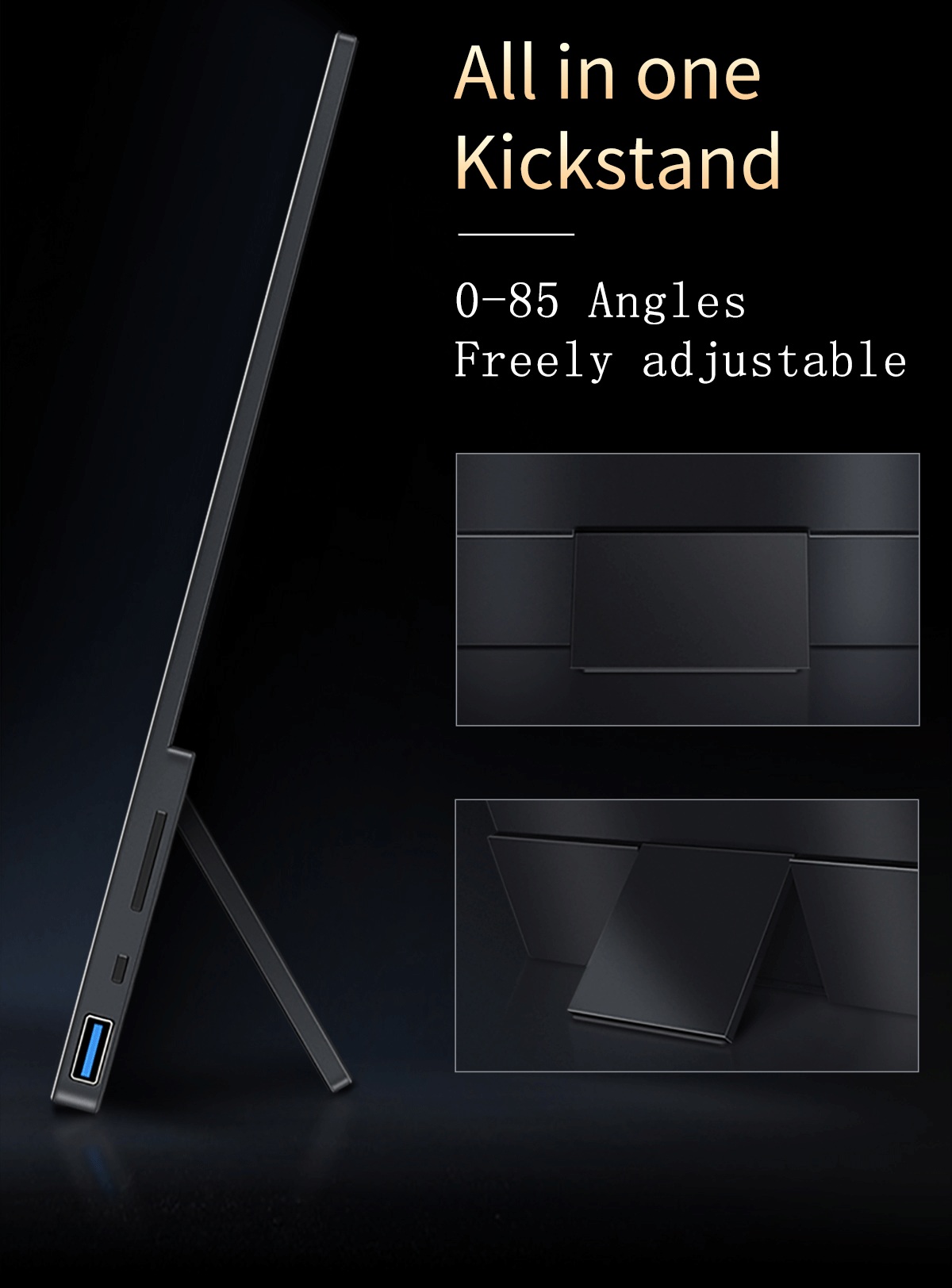
Confirm that your laptop or other device supports USB-C DisplayPort Alternate Mode if you plan to use USB-C video output. HDMI provides another connection option for compatible devices.
Step 4: Determine Whether Touch Functionality Is Necessary
The optional 10-point capacitive touch function can support interactive applications, touch-based navigation, and certain presentation workflows.
Step 5: Evaluate Manufacturer Capabilities
If you are purchasing for a business or integrating displays into a commercial project, consider the manufacturer’s product development experience, production capabilities, quality management, and customization support.
Why Work with Weichensi Technology?
Shenzhen Weichensi Technology Co., Ltd. has 9 years of experience in display terminal development and manufacturing. The company focuses on portable monitors, medical monitors, industrial monitors, and various all-in-one computer solutions.
Its manufacturing and technical capabilities support different display requirements across commercial, industrial, medical equipment, education, and smart office applications.
Key company strengths include:
- 9 Years of Industry Experience: Experience in developing and manufacturing portable, medical, and industrial display products.
- 18+ Product Certifications: Documented product certification portfolio supporting product compliance requirements.
- 9+ Authorized Patents: Intellectual property related to the company’s technology and product development.
- 94+ Global Partners: International business partnerships across different markets.
- Integrated Production System: Manufacturing processes covering product design, solution development, production, and assembly.
- Quality Management: Production inspections and testing procedures designed to maintain consistent product quality.
Weichensi also offers a broader product portfolio, including Android all-in-one computers, industrial all-in-one machines, and advertising displays. This allows buyers to discuss different display requirements with one manufacturer.
For businesses seeking a portable monitor manufacturer in China, evaluating production experience and product range can help establish a more suitable long-term supply relationship.
Frequently Asked Questions
1. Is a 4K OLED Portable Monitor Suitable for Photo Editing?
Yes. A 4K OLED portable monitor with 100% DCI-P3 coverage and a 100,000:1 contrast ratio provides useful visual characteristics for photo editing. For professional color-critical work, you should also check calibration accuracy.
2. Does This OLED Portable Monitor Support Touch Input?
Yes. The product offers an optional 10-point capacitive touch function. You should confirm touch availability and operating system compatibility when selecting a specific configuration.
3. Can I Connect the Portable OLED Monitor to a Laptop?
Yes. The monitor supports USB-C with DisplayPort Alternate Mode and HDMI. Your laptop must support the corresponding video output standard for the selected connection method.
Conclusion
Choosing a 16 Inch 4K OLED Portable Monitor means evaluating more than screen size and resolution. Color gamut, contrast ratio, brightness, connectivity, and manufacturer reliability all influence the final application experience. With a Samsung OLED panel, 3840 × 2160 resolution, 100% DCI-P3 coverage, and a 100,000:1 contrast ratio, this portable OLED display offers specifications suited to creative work, media production, and mobile office applications. Shenzhen Weichensi Technology Co., Ltd. combines 9 years of display industry experience with a diverse product portfolio to support different customer requirements.
Looking for a portable OLED display solution for your next project? Contact Weichensi Technology to discuss product specifications, optional touch functionality, model dimensions, and potential customization requirements. Share your application scenario and purchasing needs to identify a suitable display configuration.


Add comment