


An ARM Cortex Android AIO can help you simplify industrial equipment interfaces, monitor operating data, and manage machine controls through a single integrated device. However, choosing an industrial computer involves more than comparing screen sizes. You also need to consider processing performance, operating system compatibility, display readability, environmental protection, and long-term operating stability.
Shenzhen Weichensi Technology Co., Ltd. develops display terminal devices for industrial control, commercial display, medical equipment, and other professional applications. Its Industrial Android Panel PC combines an ARM Cortex-based processor, Google Android 14, a Full HD display, and a fanless cooling design. If you are sourcing an Android Integrated Display for factory equipment or an industrial automation project, understanding these specifications can help you determine whether this configuration meets your application requirements.
What Makes an ARM Cortex Android AIO Suitable for Industrial Use?
An industrial all-in-one computer integrates computing hardware and a display into one unit. This configuration can reduce the need for separate display and computing devices while simplifying equipment installation.
The Weichensi Industrial Android Panel PC offers several features for industrial environments:
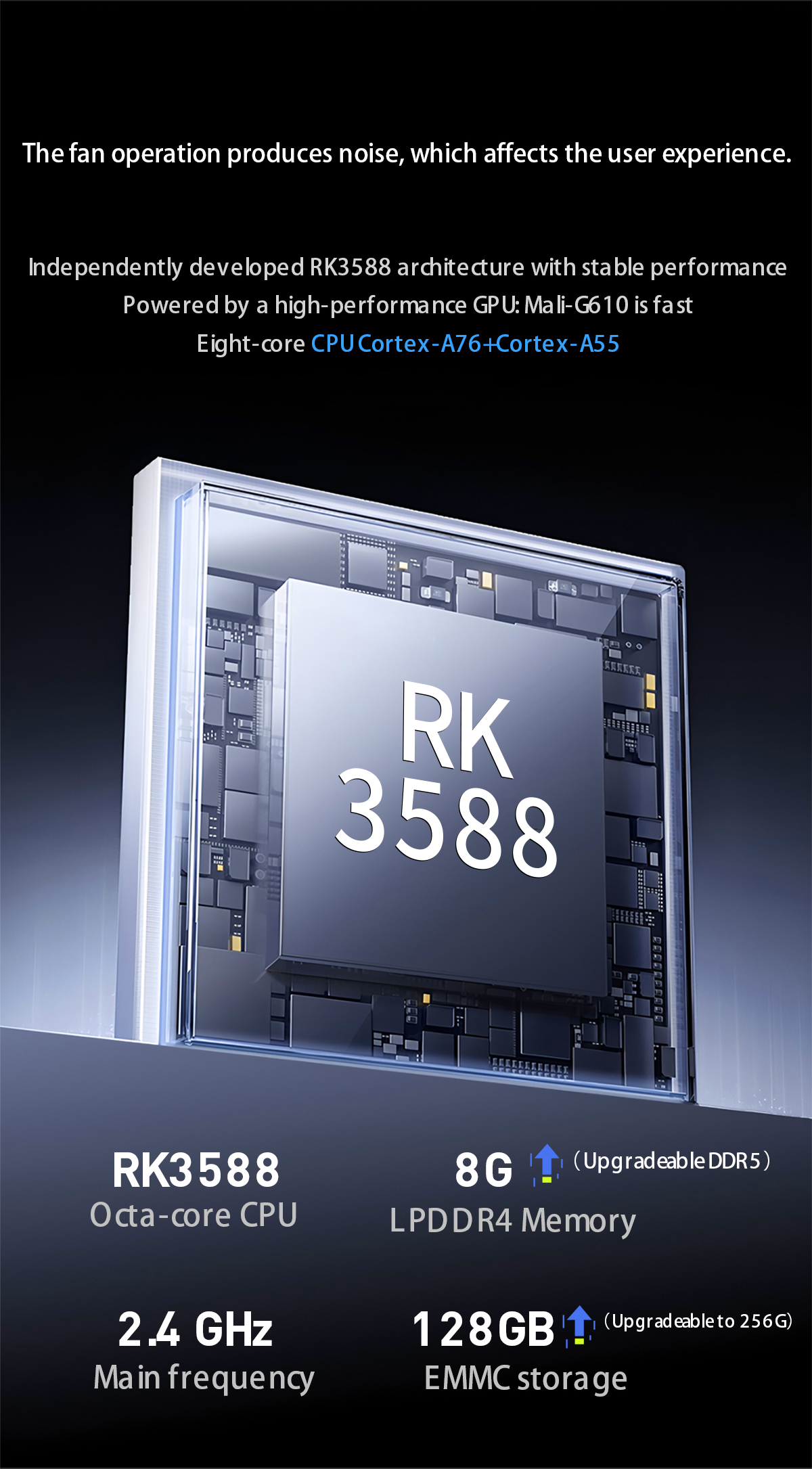
- ARM Cortex processing: The listed configuration combines four Cortex-A76 cores with four Cortex-A55 cores, with a stated frequency of 2.4 GHz.
- Android 14 operating system: Supports Android-based application development and equipment interfaces, subject to software compatibility.
- Memory options: LPDDR4 memory is listed as 8 GB, with 4 GB, 8 GB, and 16 GB options indicated.
- Integrated graphics: The Mali-G610 graphics processor supports the device’s visual interface.
- Fanless cooling: The passive cooling structure eliminates the need for a cooling fan and helps reduce dust entering through fan openings.
- IP45 protection: The enclosure is specified for protection against solid objects and water jets within the limits of the IP45 rating.
Together, these features make the unit worth evaluating for equipment interfaces, production monitoring, and industrial information display applications.
Android Integrated Display Specifications and Benefits
When evaluating an Android Integrated Display, match its hardware specifications to the software and operating conditions of your project.
| Specification | Weichensi Industrial Android Panel PC | Practical consideration |
|---|---|---|
| Processor | ARM Cortex-A76 and Cortex-A55 configuration | Evaluate application processing requirements |
| Operating system | Google Android 14 | Check app and driver compatibility |
| Memory | 4 GB, 8 GB, or 16 GB options listed | Select according to workload |
| Graphics | Mali-G610 | Supports graphical interfaces |
| Resolution | 1920 × 1080 Full HD | Suitable for detailed control interfaces |
| Brightness | 400 nits | Assess ambient lighting and glare |
| Contrast ratio | 1200:1 | Helps distinguish interface elements |
| Color gamut | 100% sRGB listed; description also states 72% NTSC | Confirm the applicable panel specification |
| Power input | DC 12 V, 3 A | Verify power supply compatibility |
| Protection | IP45 | Assess actual dust and water exposure |
The manufacturer lists both 100% sRGB and 72% NTSC for color gamut in different sections of the product information. Confirm the final panel specification before using this figure in a purchase contract.
Display Performance for Equipment Operators
The 1920 × 1080 resolution provides space for dashboards, process diagrams, status indicators, and equipment parameters. Meanwhile, the 400-nit brightness and 1200:1 contrast ratio offer useful reference points when assessing readability in a factory or control room.
The product description also specifies capacitive ten-point touch. This feature can support multi-touch interaction, although the suitability of a particular interface depends on the application software and operating conditions.
Fanless Design and Continuous Operation
Industrial equipment may operate for extended periods in environments where dust, vibration, and maintenance access are concerns. A fanless design removes the cooling fan as a moving component and reduces the need for fan-related maintenance.
Weichensi states that the product’s backplane has an average lifespan exceeding 50,000 hours and that the design supports 24/7 operation requirements. These figures should be treated as manufacturer-provided specifications rather than a guarantee of the service life of the complete device.
Where Can You Use an Industrial Android Panel PC?
An ARM Cortex industrial computer can serve as the interface between operators and connected equipment. Consider these application scenarios when evaluating an Android Integrated Display.
- Factory automation: Display machine status, production parameters, operating instructions, and process information.
- Industrial control systems: Provide a visual interface for equipment operation and monitoring, subject to control-system integration requirements.
- Production-line monitoring: Present real-time data supplied by compatible sensors, controllers, or industrial software.
- Substations and equipment rooms: Display operational information where the device’s protection rating and environmental limits are appropriate.
- Commercial and industrial information displays: Run compatible Android applications for dashboards and operational notices.
Before deployment, verify communication interfaces, mounting requirements, operating temperature, vibration tolerance, and compatibility with the existing control system. The supplied product information does not specify every interface or environmental limit, so request the complete technical datasheet for your project.
How to Select the Right ARM Cortex Android AIO
Follow these steps before placing a bulk or project-based order.
- Define the application. Identify whether you need machine control, production monitoring, an operator terminal, or an information display. This determines your software and hardware requirements.
- Confirm processing and memory needs. Check your application’s CPU load, memory consumption, graphics requirements, and background services. Choose an available memory configuration that provides sufficient capacity.
- Verify display and touch requirements. Compare Full HD resolution, 400-nit brightness, touch functionality, viewing conditions, and screen size with the installation environment.
- Assess environmental protection. Confirm whether IP45 is sufficient for the actual exposure to dust and water. Check vibration, temperature, electromagnetic compatibility, and enclosure requirements separately.
- Test software and connectivity. Validate Android 14 application compatibility, required drivers, network connections, peripheral interfaces, and communication protocols before deployment.
- Request project-specific confirmation. Contact Shenzhen Weichensi Technology Co., Ltd. for the complete datasheet, available customization options, mounting details, and sample evaluation arrangements.
ARM Cortex Android AIO vs. Conventional Industrial PC
Choosing between an Android-based device and a conventional Windows industrial PC depends on the software environment and system integration requirements.
| Evaluation factor | ARM Cortex Android AIO | Windows industrial PC |
|---|---|---|
| Operating system | Android | Windows |
| Application environment | Compatible Android applications | Compatible Windows applications |
| Hardware platform | ARM Cortex-based configuration | Depends on the selected model |
| Typical evaluation focus | Android interface and embedded applications | Existing Windows software and peripherals |
| Integration priority | Android APIs, drivers, and communication compatibility | Windows drivers, software, and communication compatibility |
Neither platform is suitable for every project. If your equipment already depends on Windows-only software or specialized drivers, a Windows industrial PC may be more appropriate. Conversely, an Android-based panel PC is worth considering when your application supports Android and benefits from an integrated touchscreen interface.
FAQ
1. What is an ARM Cortex Android AIO?
An ARM Cortex Android AIO is an all-in-one computing device built around an ARM Cortex-based processor and an Android operating system. It combines computing hardware and a display in one unit for compatible industrial, commercial, or embedded applications.
2. Is an IP45 Android panel PC suitable for every factory environment?
No. IP45 provides defined protection against solid objects and water jets, but it does not establish suitability for every industrial condition. Evaluate chemical exposure, high-pressure washing, extreme temperatures, vibration, and other environmental requirements before selecting a device.
3. Can the Weichensi Industrial Android Panel PC be customized?
The product description identifies customization options for interfaces, installation methods, and system platforms. However, the availability of specific processor changes, communication interfaces, or firmware modifications needs confirmation from Shenzhen Weichensi Technology Co., Ltd.
Conclusion
Selecting an ARM Cortex Android AIO requires a balance between computing capability, display performance, environmental protection, and software compatibility. The Weichensi Industrial Android Panel PC combines Android 14, an ARM Cortex-based processor, Full HD resolution, 400-nit brightness, capacitive ten-point touch, and IP45 protection in an integrated industrial display solution. By confirming the detailed specifications and testing application compatibility before deployment, you can determine whether this Android Integrated Display meets your factory control, equipment monitoring, or industrial HMI requirements.
Request Technical Information
Contact Shenzhen Weichensi Technology Co., Ltd. to request the full product datasheet, confirm available memory and interface configurations, and discuss your industrial display project. Provide your application scenario, operating environment, software requirements, and estimated order quantity to help the team assess a suitable configuration.


Add comment